A Peniche forecast only becomes useful when you combine swell direction, wind and tide with the exposure of each beach. The peninsula creates options, but it does not make every spot safe or suitable.
Check live conditions first
- Forecast
- Windguru and Surfline
- Wind
- Direction matters
- Safety
- Observe before entering
Use Windguru Peniche for wind and swell trends and Surfline for spot forecasts and available cameras. Treat model output as guidance, then compare it with what the sea is actually doing.
How swell direction changes the coast
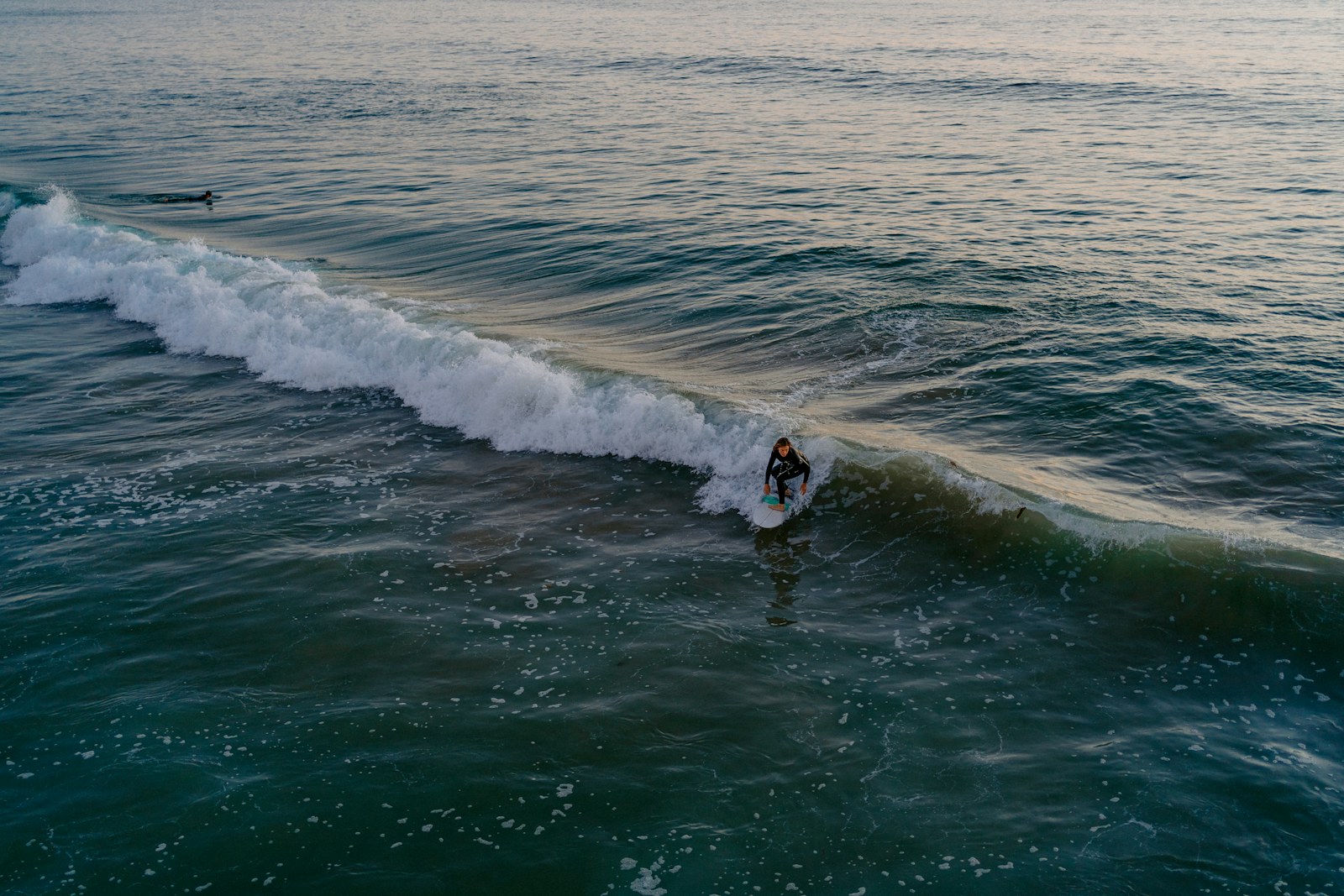
North-west and west swells reach many exposed beaches, while the peninsula can shelter one side from wind or excessive size. A beach that looks small on a general forecast may still have stronger sets, currents or shorebreak than expected.
Wind and tide
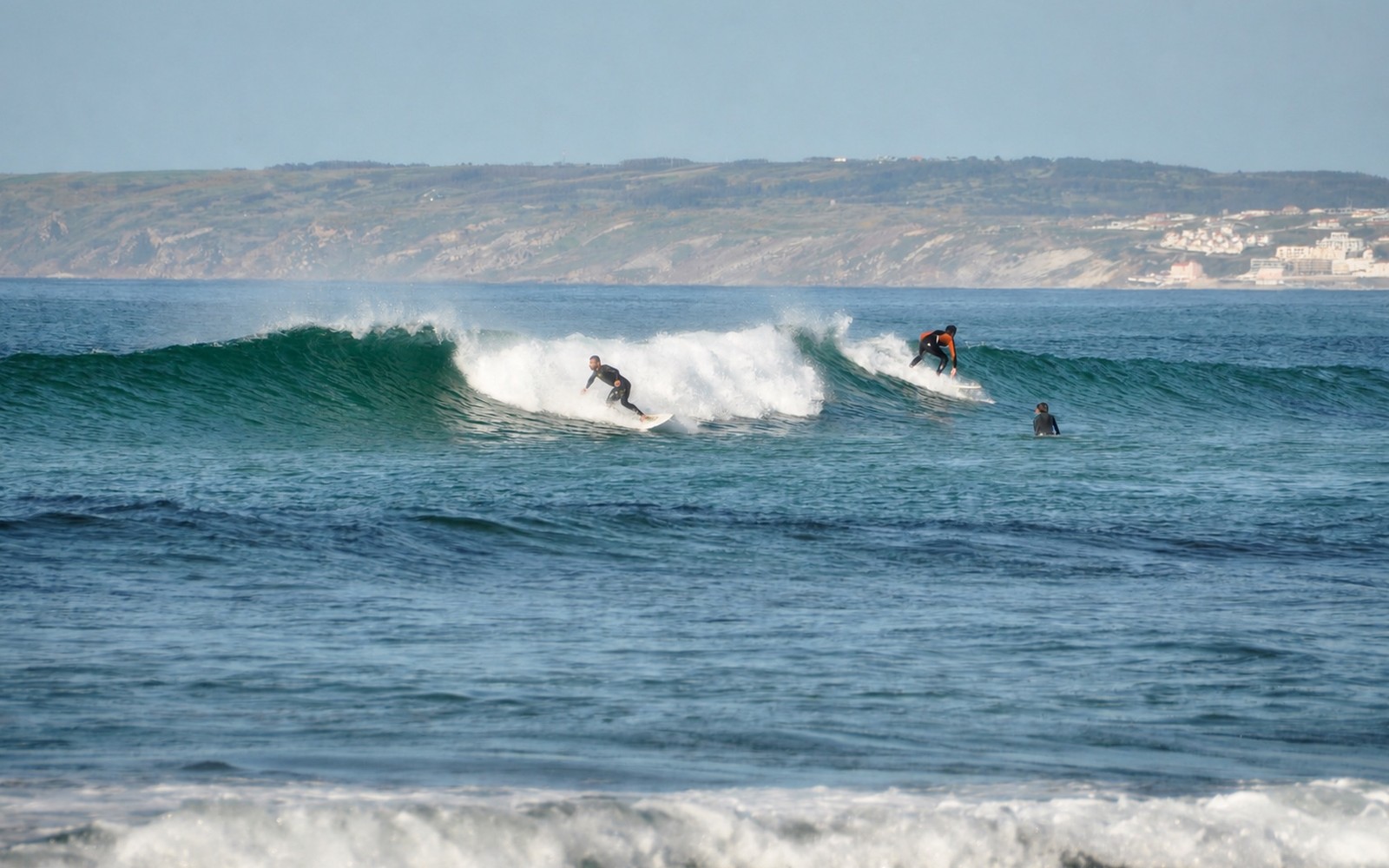
Light offshore wind generally keeps waves cleaner; strong onshore wind makes them less organised. Tide effects vary by spot, bank and swell. Supertubos, Lagide and the Baleal beach breaks do not share one universal best tide.
- Check the hourly wind direction, not only speed
- Compare at least two forecast models
- Watch several sets before choosing an entry point
- Ask a local school or lifeguard when uncertain
Match the forecast to your level
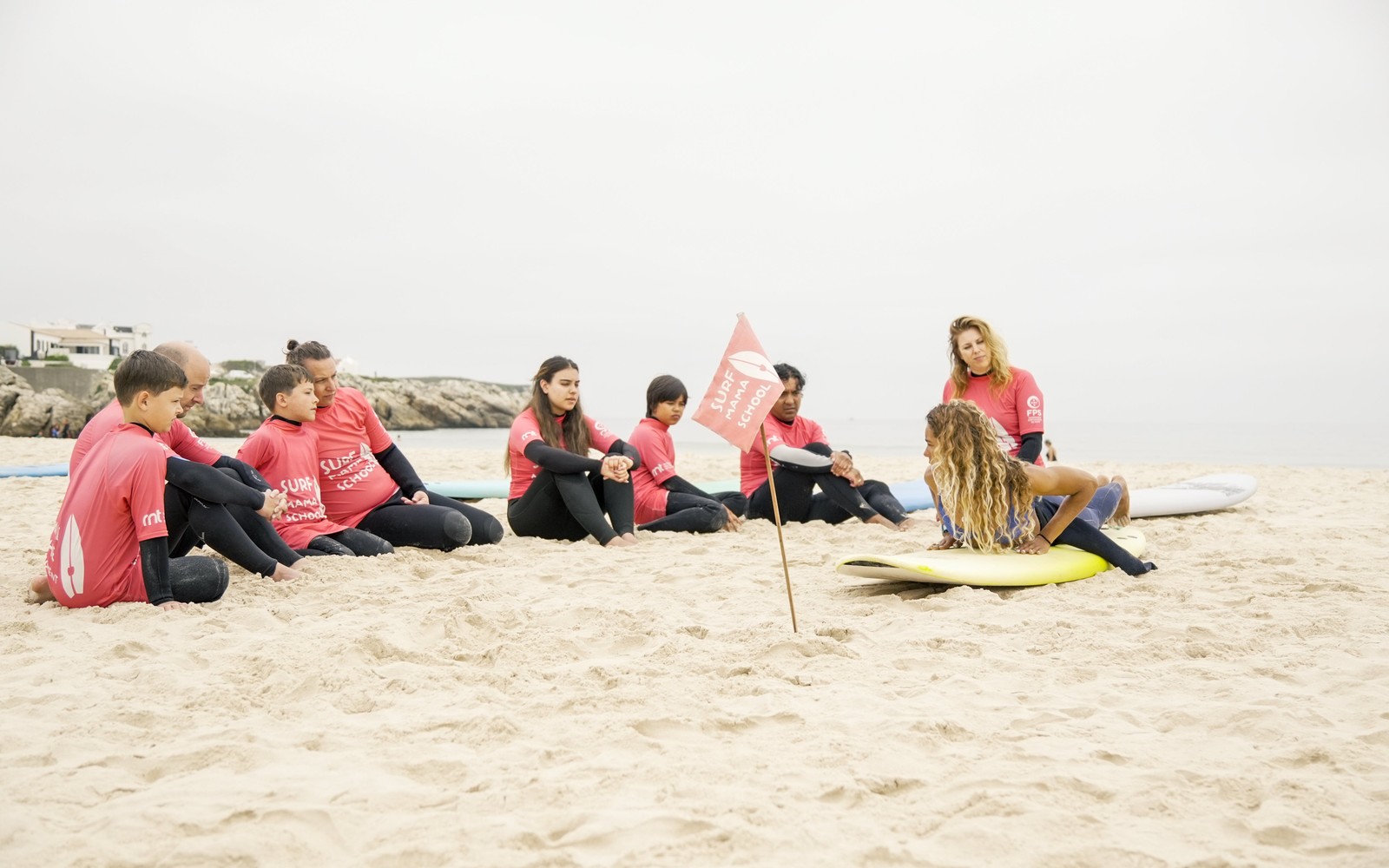
Beginners should prioritise a supervised lesson and a forgiving sandy area over a famous forecast. Experienced surfers still need local knowledge around rocks, rips and crowded peaks. Use our Peniche surf spot guide for the practical differences.
A five-step way to read the forecast
- Start with swell height, period and direction
- Compare wind direction hour by hour
- Check the tide window for the specific spot
- Use a webcam only as a recent visual reference
- Confirm the decision from the beach before entering
Swell height by itself is not a measure of difficulty. A longer-period swell can carry substantially more energy than a shorter-period swell of a similar height, and the direction determines how directly that energy reaches each beach. Wind can change faster than the headline daily forecast, so the hourly view is more useful than a single icon.
Treat tide recommendations as a starting point rather than a fixed rule. Peniche beach breaks depend on moving sandbanks, and a tide that worked on a previous visit may produce a different wave after storms or seasonal changes.
Use Peniche’s different exposures
- North coast
- Baleal and Lagide options
- South coast
- Supertubos and Consolação
- Daily decision
- Exposure, wind and ability
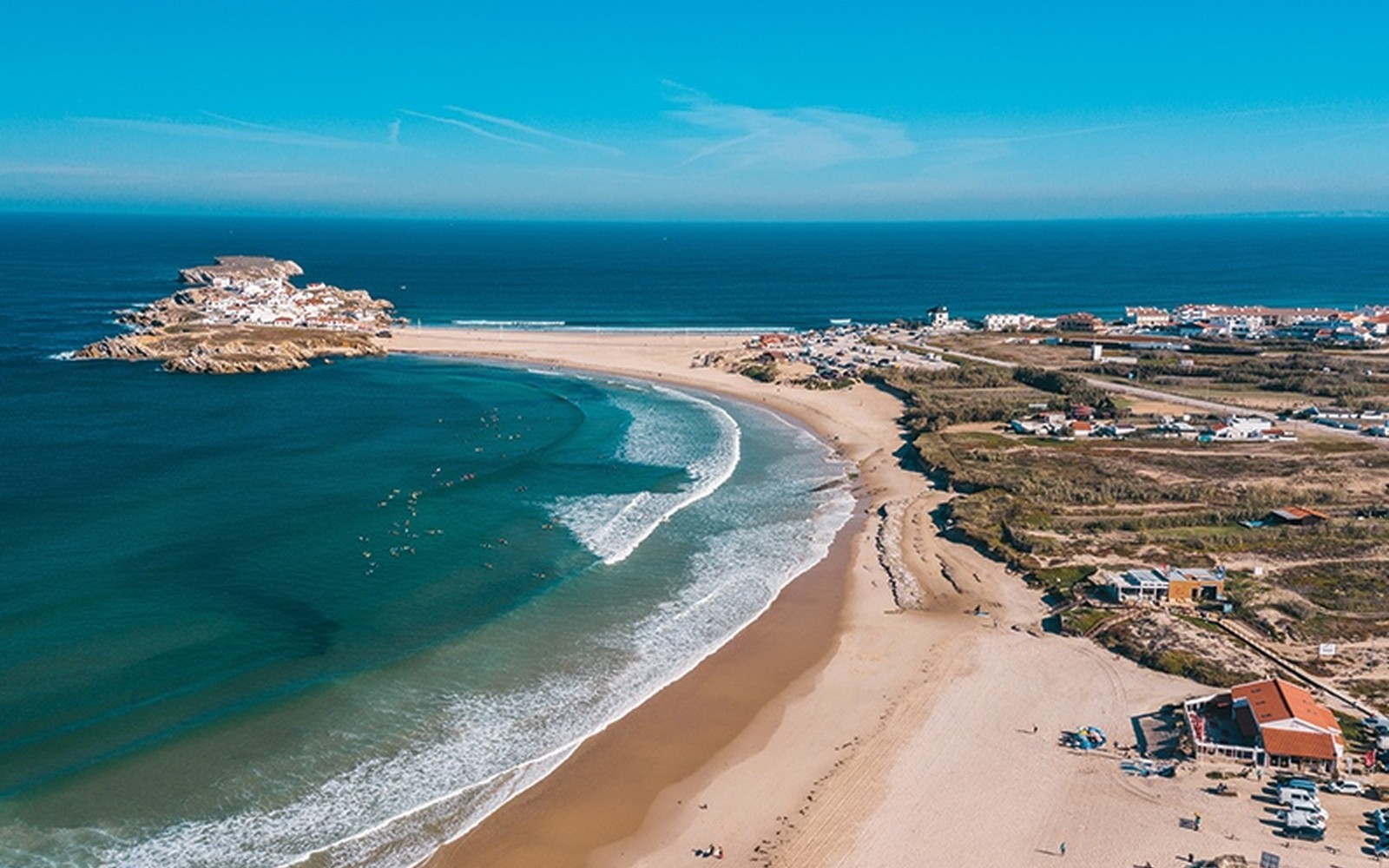
The practical advantage of Peniche is not that one spot always works; it is that the peninsula and surrounding bays face different directions. When one side is wind-affected or too exposed, another may be cleaner or smaller. That possibility still needs to be matched to ability, access, crowds and hazards.
For a first surf trip, compare conditions with a qualified school instead of trying to optimise the forecast alone. More experienced surfers can use the spot-by-spot Peniche guide to build a shortlist, then make the final call after observing the water.
Frequently asked questions
What is the best surf forecast for Peniche?
No single forecast is perfect. Compare Windguru or another marine model with a spot forecast, available webcams and direct observation.
What wind is best for surfing in Peniche?
It depends on the side of the peninsula. Offshore or light winds usually produce cleaner waves, but local orientation changes the answer from beach to beach.
Can beginners use the surf forecast alone?
A forecast cannot assess ability or local hazards. Beginners should use a qualified surf school to choose the beach and session.
Does Peniche always have surf?
Peniche is consistent because its coastline faces several directions, but there are still flat, stormy or unsuitable days.
Make the coast your classroom.
Compare surf camps, schools and beginner-friendly options around Peniche and Baleal.
Compare surf camps